Warehouse Garage Door Repair in Denver
Your Warehouse Doors Keep Your Entire Operation Moving – Until They Don’t
Warehouse garage door repair is about keeping dock positions, storage areas, and secure openings usable during a busy workday. A damaged door can slow shipments, expose inventory, and create safety risks for forklift traffic.
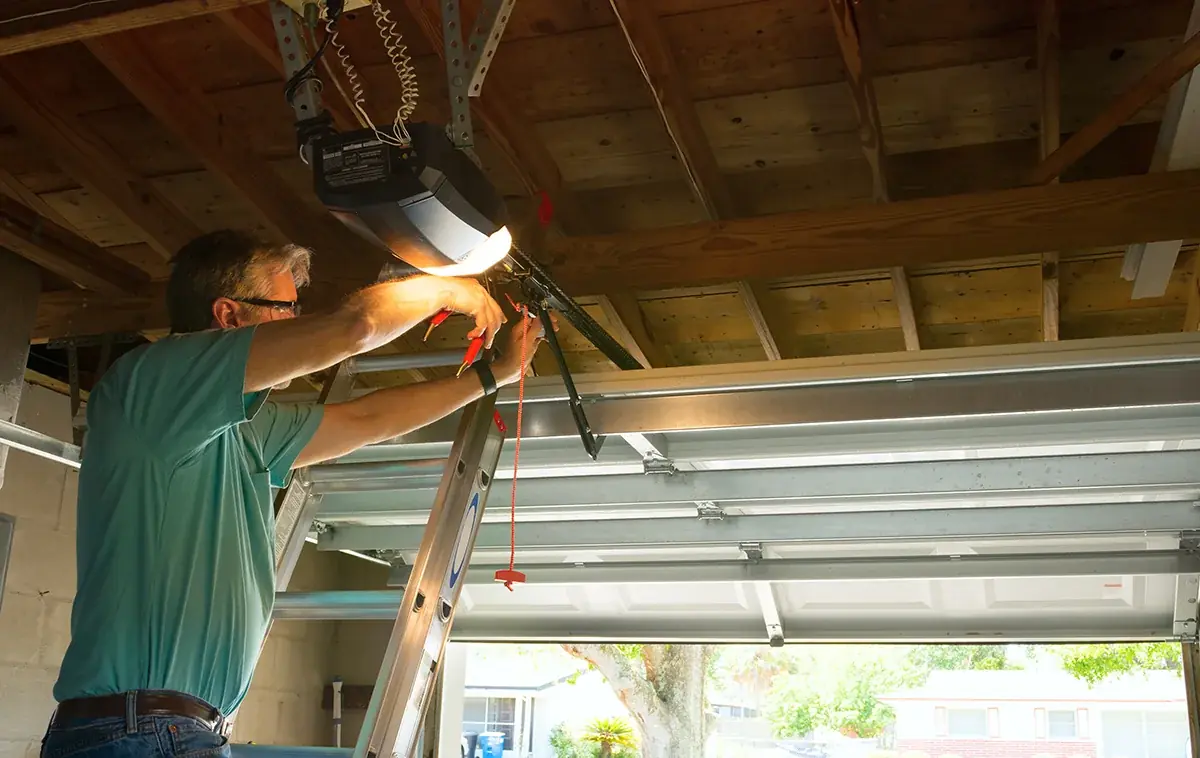
Denver Garage Door Ltd repairs warehouse doors by checking the door, opener, tracks, springs, panels, seals, and loading area conditions that affect daily operation.
Warehouses in the Denver metro area – from the industrial corridors of Commerce City and Globeville to the distribution hubs along I-70 in Aurora and Green Valley Ranch – rely on their doors more than almost any other building component. A typical warehouse may have 10, 20, or 50+ doors of different types, each serving a specific function. When one fails, it creates a bottleneck. When several fail, it creates a crisis.
Denver Garage Door Ltd provides warehouse door repair across Denver, Aurora, Lakewood, Arvada, Centennial, Westminster, and the surrounding metro area. As a BBB Accredited Business and Denver Metro Chamber of Commerce member, we understand that warehouse operations run on schedules measured in hours, not days. That’s why we offer 24/7 emergency service and free on-site assessments for warehouse and industrial facilities.
Top-Rated Warehouse Door Repair in Denver: The Types of Doors in Your Facility
Warehouses don’t use one type of door. They use several, each engineered for a different purpose. Understanding what you have helps you understand what can go wrong – and what the repair involves.
Sectional overhead doors. These are the workhorses of shipping and receiving. Horizontal steel panels connected by hinges travel along vertical and horizontal tracks, powered by a commercial operator motor. Sectional doors are the standard at loading bays across Denver’s warehouse districts. They’re available in insulated and non-insulated configurations, and they take the most daily abuse from forklift traffic, truck docking, and high-cycle operation.
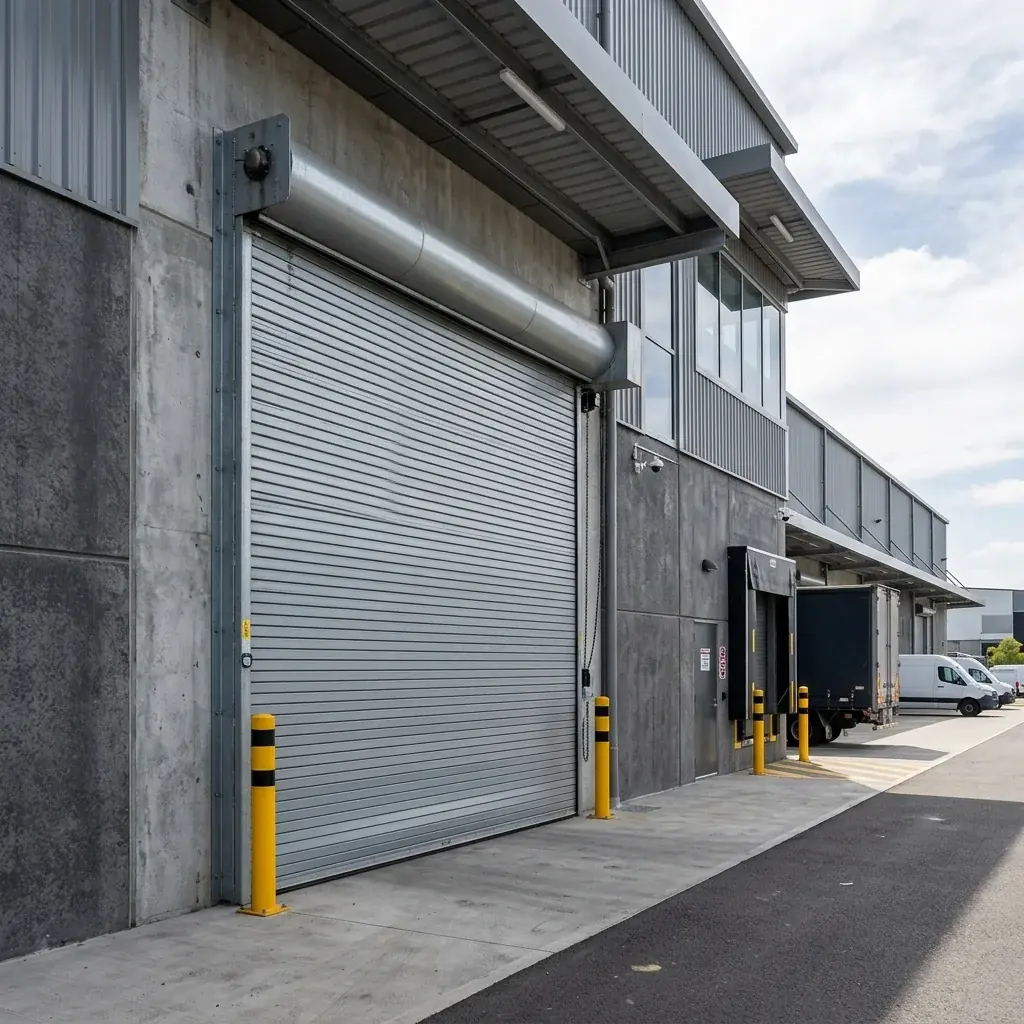
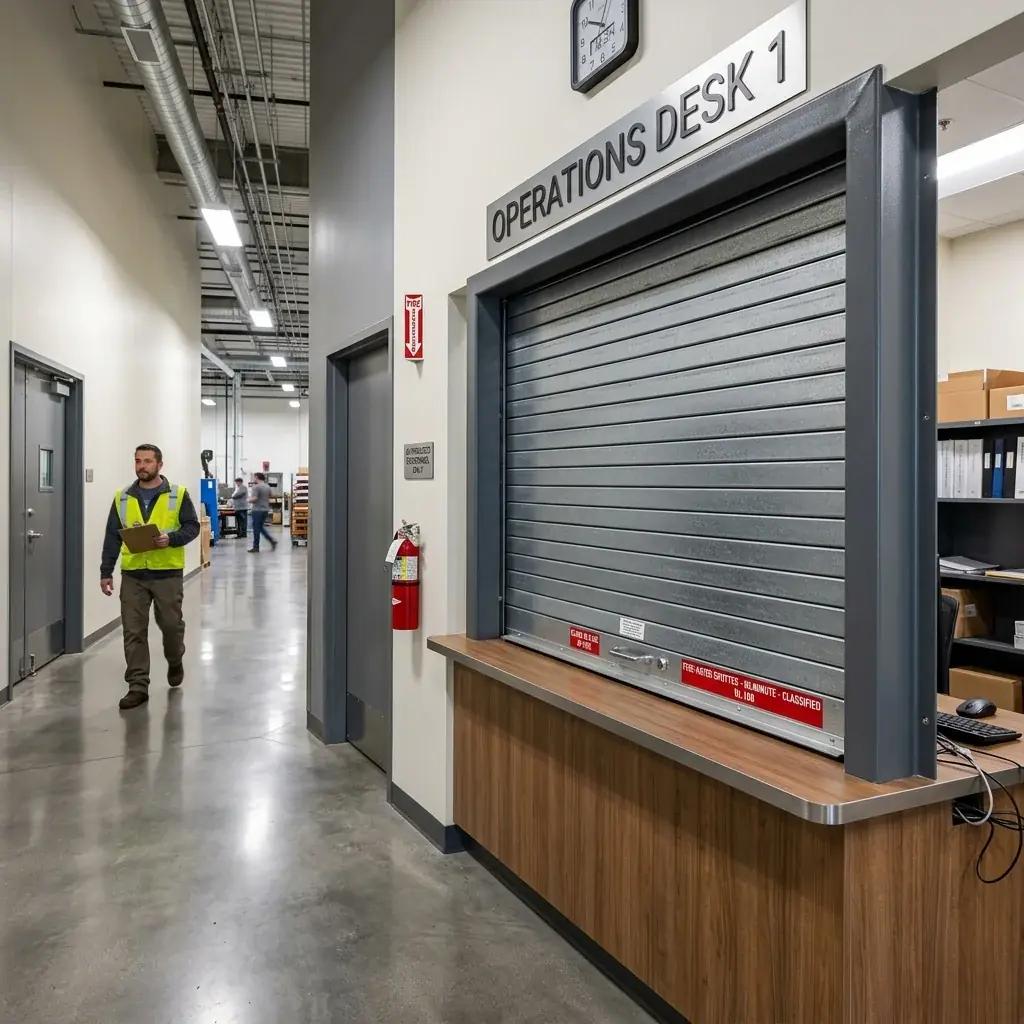
Rolling steel doors. Interlocking steel slats that coil around a barrel assembly above the opening. Rolling steel doors are common at storage bays, interior partitions, and security-sensitive openings where a solid steel barrier is needed. They take up zero ceiling space, which matters in warehouses where every cubic foot of vertical storage counts.
High-speed doors. Fabric or rubber doors engineered for rapid open-close cycles – some completing a full cycle in under 10 seconds. High-speed doors are found between climate zones, between warehouse sections, and at openings where minimizing air exchange is critical. They’re essential in cold storage, food distribution, and pharmaceutical warehouses throughout the Denver area.
Fire-rated doors. Required by building code at specific wall openings, fire-rated doors close automatically when triggered by heat or a fire alarm system. They may be sectional or rolling steel, and they carry a rating (typically 1 to 3 hours) that specifies how long they resist fire passage. Repairs must maintain the fire rating – using non-specified parts voids the certification.
Dock doors with levelers and seals. Many warehouse doors work in conjunction with dock levelers (the platform that bridges the gap between the dock floor and the truck bed), dock seals or shelters (the foam or curtain structures that create a weather barrier around the truck), and dock bumpers. A failure in any of these components affects how the door and dock perform together.
The Number One Cause of Warehouse Door Repair: Forklift Impact
If you manage a warehouse, you already know this. Forklifts hit doors. It happens in every facility, regardless of how well-trained the operators are. A loaded forklift turning through a doorway, a pallet catching the edge of a guide track, a mast tilted too high clipping the header – these are daily realities in busy warehouse environments.
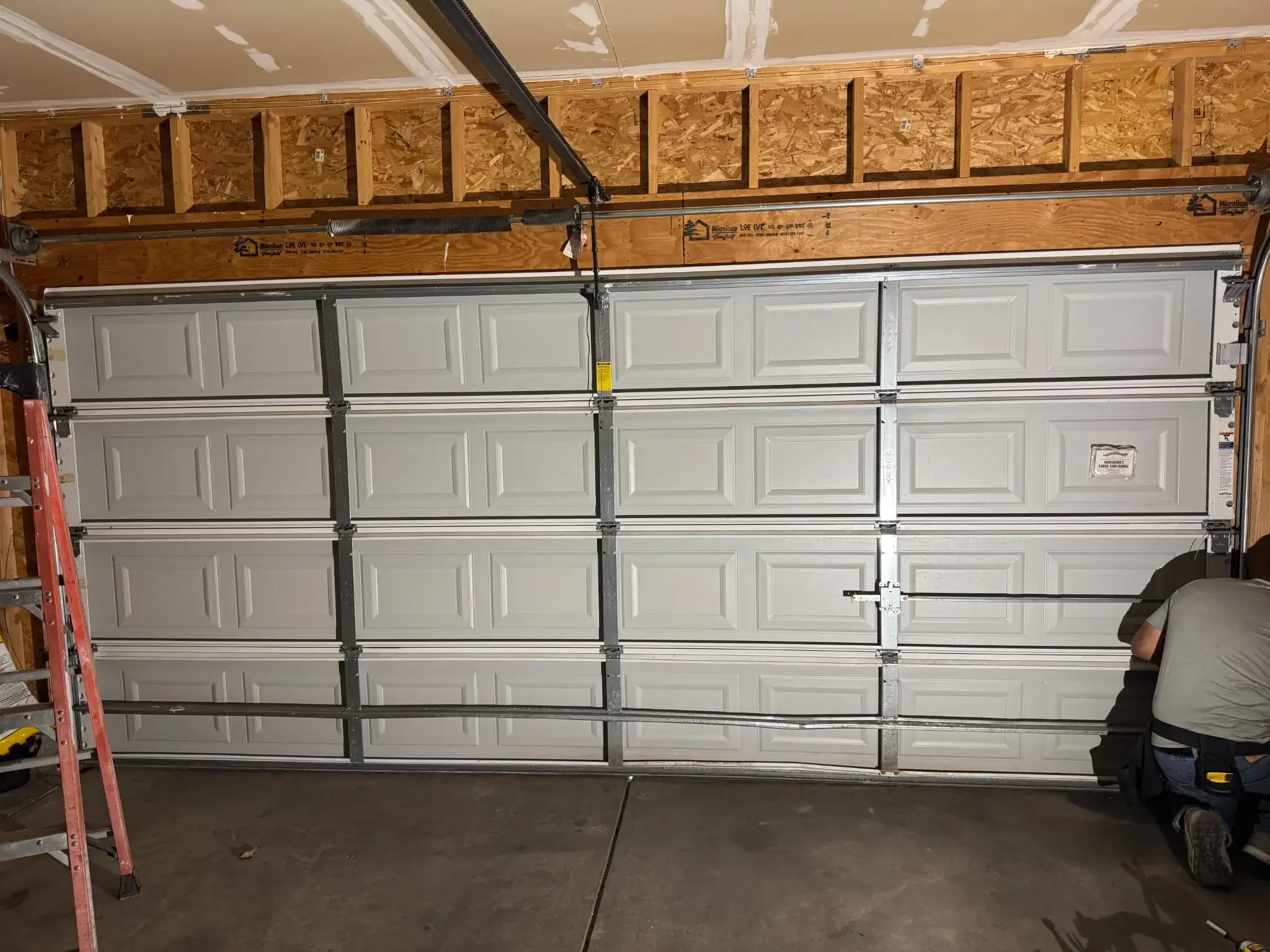
Here’s what makes forklift impact particularly damaging. The force is concentrated on a small area – a panel, a track, a guide channel – but the damage cascades through the entire system. A bent bottom panel throws the door out of alignment. A damaged track causes the rollers to bind, which puts stress on the springs. A hit to the guide channel on a rolling steel door can pull the curtain out of its track and jam the barrel assembly.
Across the warehouse and distribution facilities we service in Commerce City, Elyria-Swansea, Aurora’s industrial parks, and throughout metro Denver, forklift impact accounts for more repair calls than any other single cause. But here’s what matters most: the damage from a forklift hit gets worse with every cycle if the door continues to operate. A door that still “works” after a hit may be grinding through bent tracks, stressing misaligned springs, and wearing out components that were fine before the impact. For gate remote programming, we also provide gate remote programming.
Your best course of action after any forklift impact is to stop operating the door, document the damage with photos, and call (303) 335-5102 for an assessment. We can also provide repair documentation for your insurance carrier. If the impact also damaged a gate or access control device on the property, our team handles gate remote programming as well.
Quick Answer: What Types of Warehouse Doors Can Denver Garage Door Ltd Repair?
Denver Garage Door Ltd repairs all common warehouse door types including sectional overhead doors (insulated and non-insulated), rolling steel doors, high-speed fabric and rubber doors, fire-rated doors, and dock doors with associated levelers and seals. We service doors from all major commercial manufacturers including Amarr, Overhead Door, Wayne Dalton, Cornell, CHI, Raynor, Clopay, and others. We also work with high-speed door brands and specialty manufacturers for cold storage and fire-rated applications. If your warehouse has it, we can diagnose and repair it.
Quick Answer: How Quickly Can You Respond to a Warehouse Door Emergency in Denver?
Denver Garage Door Ltd offers 24/7 emergency response for warehouse and industrial facilities. A non-functional warehouse door directly impacts shipping schedules, inventory security, and climate control. Emergency calls are prioritized for the fastest possible response – nights, weekends, and holidays included. Call (303) 335-5102 at any time.
Best Warehouse Door Service in Denver: How Multi-Door Maintenance Works
Single-door residential repairs are straightforward. Warehouse door service is a different discipline. A facility with 20 or 30 doors needs a coordinated approach – and that’s where many door companies fall short.
Here’s how Denver Garage Door Ltd handles multi-door warehouse facilities. A commercial technician conducts a facility-wide assessment, inspecting every door in the building. Each door is evaluated for panel condition, track alignment, spring tension, roller and hinge wear, seal integrity, operator function, and safety sensor calibration. The technician assigns a priority level to each door based on the severity of the issue and the door’s importance to your operation. For slide gate repair, we also provide slide gate repair.
You receive a single, organized report covering every door – what’s fine, what needs attention soon, and what needs attention now. Repairs are scheduled around your shipping and receiving windows so the most critical docks stay operational while work is completed. For facilities with 10 or more doors, this consolidated approach reduces per-door cost and eliminates the cycle of reactive emergency calls that eats into your maintenance budget. Facilities that also have slide gates on the property can have those assessed during the same visit.
Warehouses in Denver’s industrial corridors – from the I-270 corridor through Commerce City to the distribution centers along E-470 in Aurora and Centennial – handle hundreds of truck movements per week. A coordinated door maintenance program keeps those movements on schedule. Call (303) 335-5102 to request a facility-wide assessment.
Temperature Control, Security, and OSHA Compliance: Why Warehouse Door Condition Matters
Warehouse doors do more than open and close. They maintain the conditions your operation depends on.
Temperature control. Cold storage facilities, freezer warehouses, and climate-controlled distribution centers rely on door insulation, seals, and rapid cycling to maintain interior temperatures. A door with deteriorated weatherstripping, a cracked panel, or a slow-closing mechanism allows warm air infiltration that forces refrigeration systems to work harder. In a large cold storage facility, a single poorly sealed door can add measurable cost to your monthly energy bill. High-speed doors between zones exist specifically to minimize air exchange – when they malfunction, the thermal barrier between your 35-degree cooler and your 70-degree staging area disappears.
Security. Warehouse inventory represents significant value. A door that won’t close fully, has gaps along the guides, or can be lifted manually due to a broken lock creates a vulnerability. Rolling steel doors and sectional doors with commercial operators provide perimeter security – but only when every component is functional. Overnight security depends on doors that close, lock, and seal.
OSHA compliance. Federal safety regulations require that powered doors in workplaces have functioning safety sensors and entrapment protection. Photo eye sensors, safety edges, and auto-reverse mechanisms must be operational. A warehouse door with bypassed or malfunctioning safety devices is a compliance violation and a liability. During every repair, Denver Garage Door Ltd tests and verifies safety sensor function.
Energy efficiency. Beyond temperature-controlled spaces, standard warehouses also benefit from properly sealed doors. Denver’s climate produces temperature swings of 40 degrees or more in a single day during spring and fall. Insulated panels, intact bottom seals, and properly fitted weatherstripping reduce HVAC load across the facility. For warehouses with dozens of doors, the cumulative energy savings from proper seal maintenance is substantial.
How Warehouse Door Repair Works
Every warehouse door repair follows a structured process. Here’s what Denver Garage Door Ltd does to get your doors back in service.
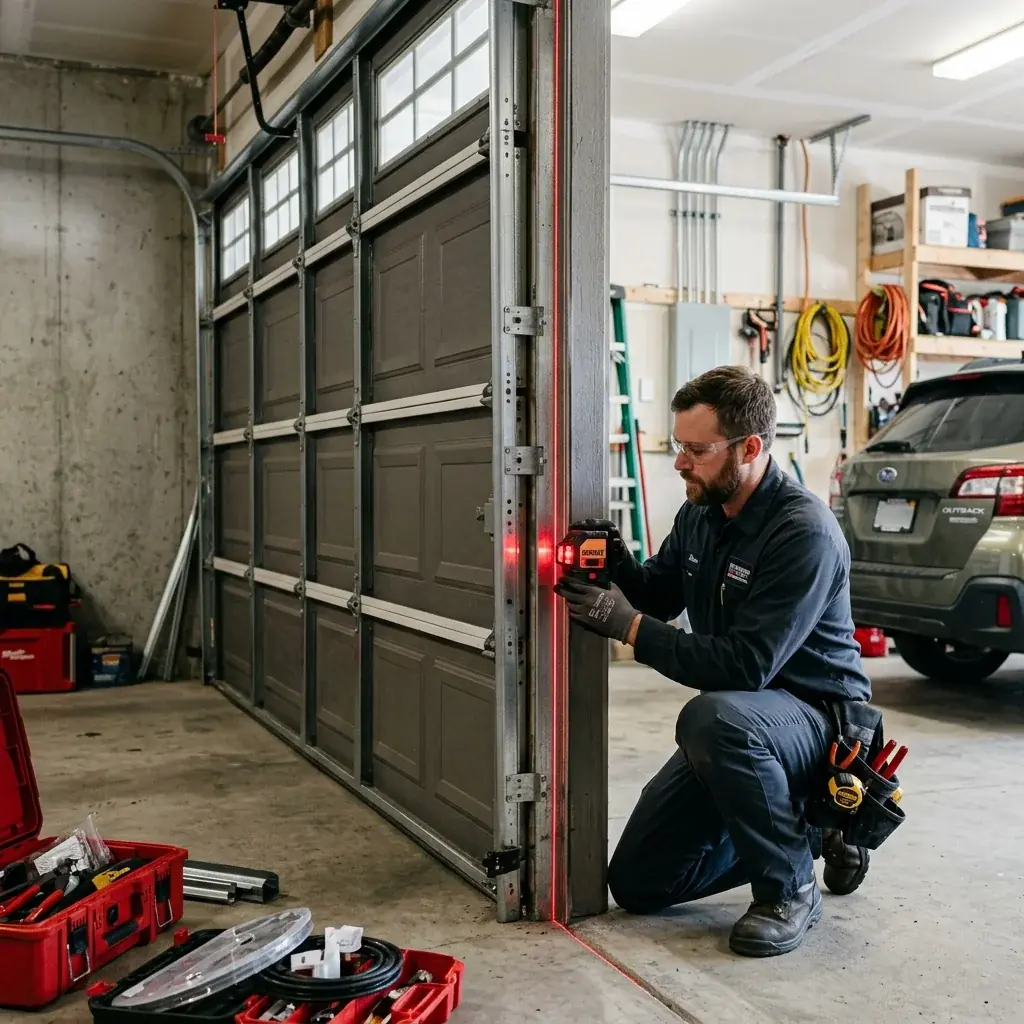
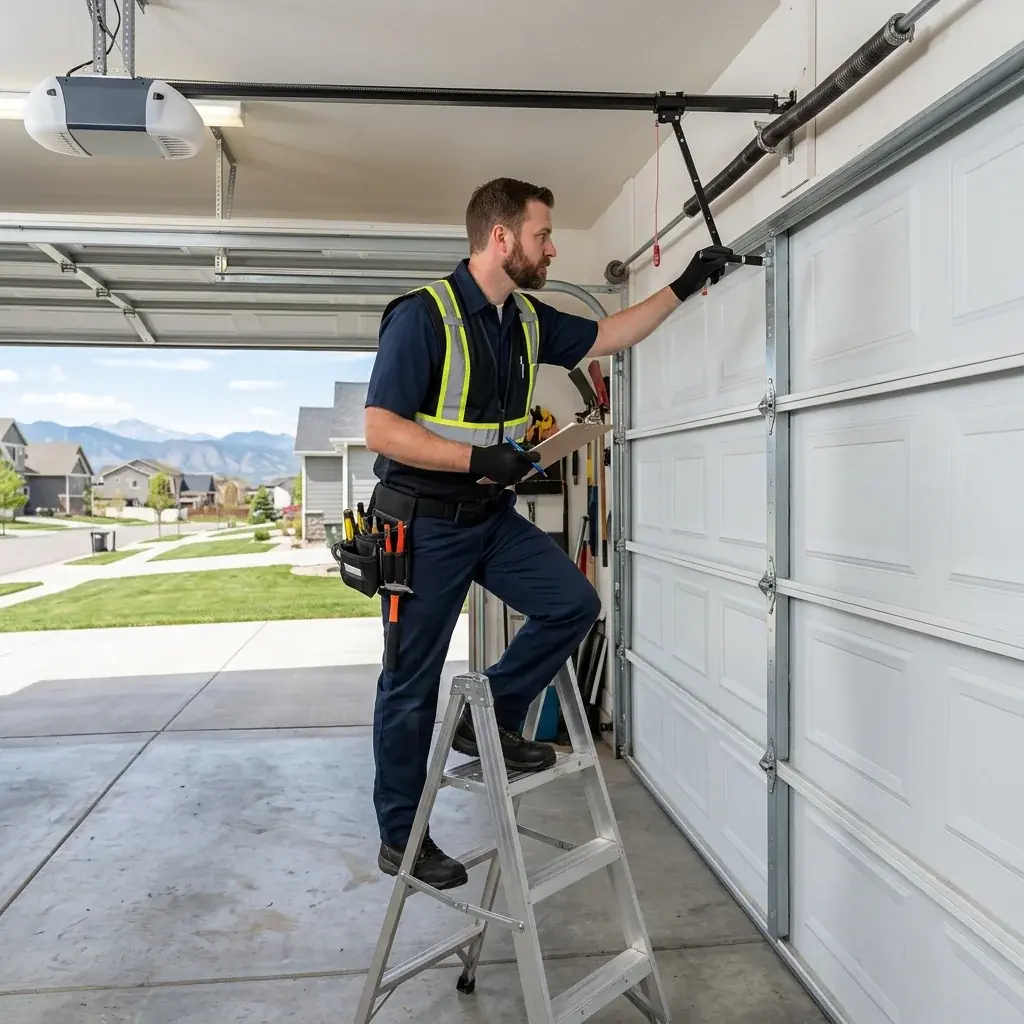
Step 1: On-site inspection and root cause diagnosis. The technician examines the complete door system – panels or curtain, tracks or guides, springs, cables, rollers, hinges, seals, weatherstripping, the operator motor, and all safety devices. For dock doors, the leveler, bumpers, and dock seal or shelter are also inspected. The goal is to identify why the door failed, not just what broke.
Step 2: Written estimate with prioritized scope. You receive a clear, written estimate before any work starts. For multi-door facilities, the estimate is organized by priority so you can approve critical repairs immediately and schedule less urgent items for a later window.
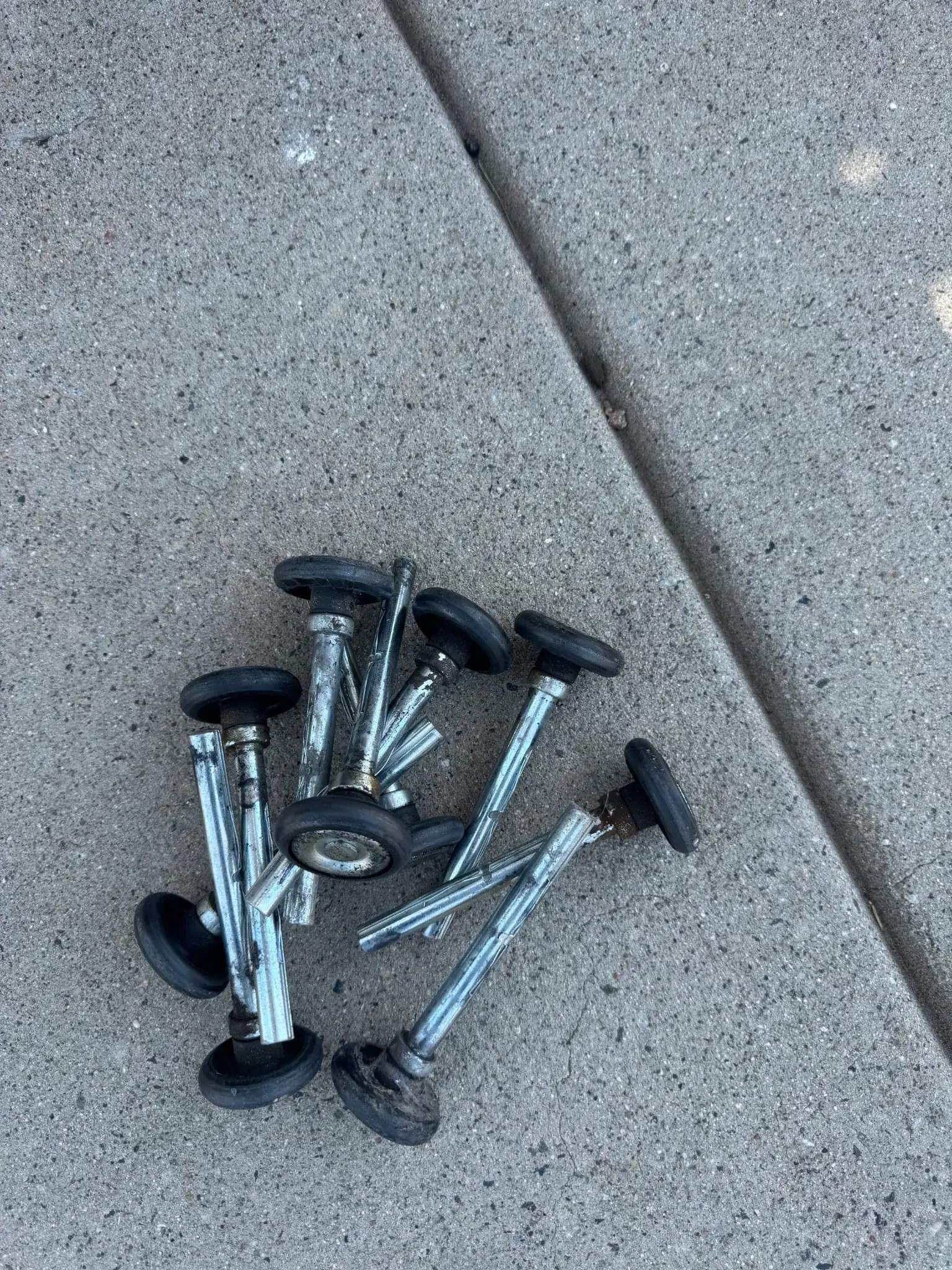
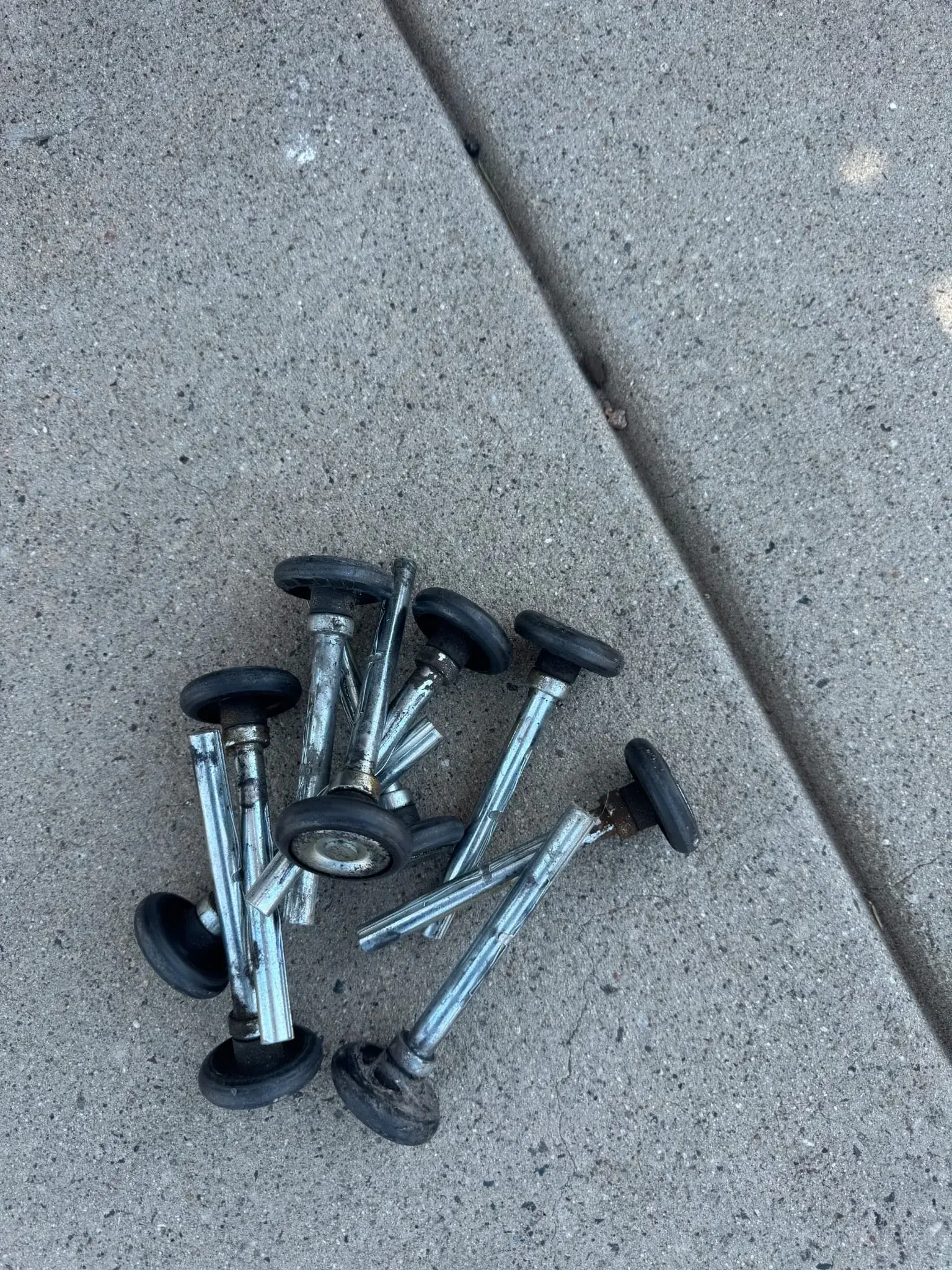
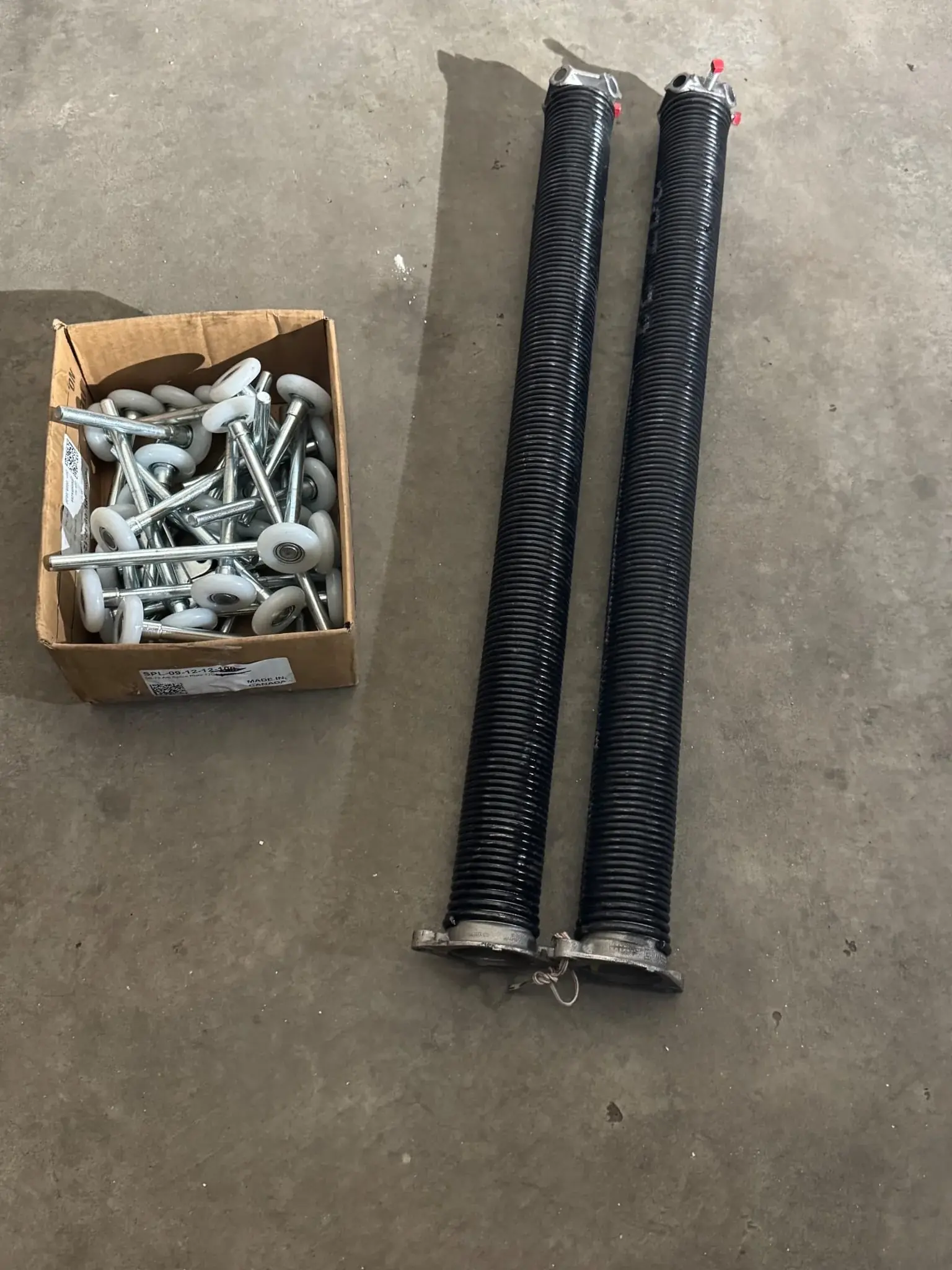
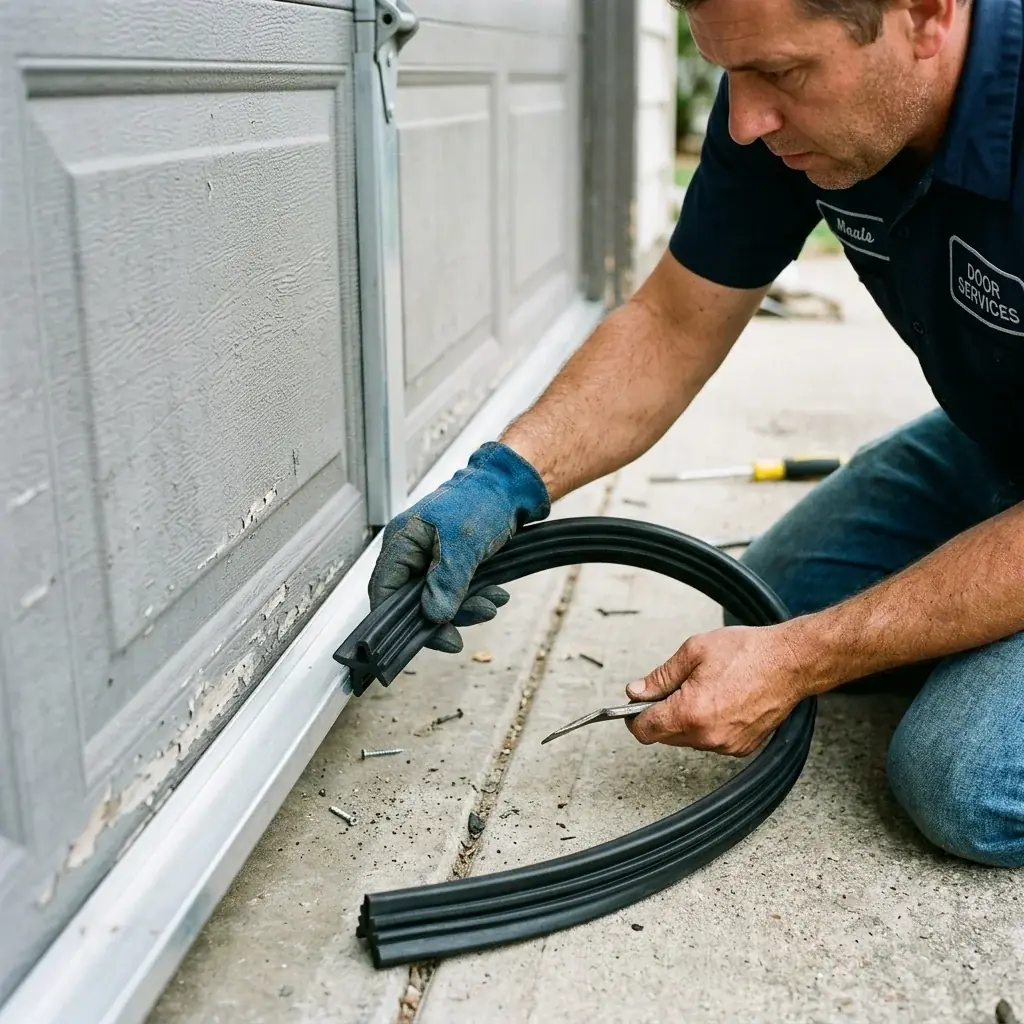
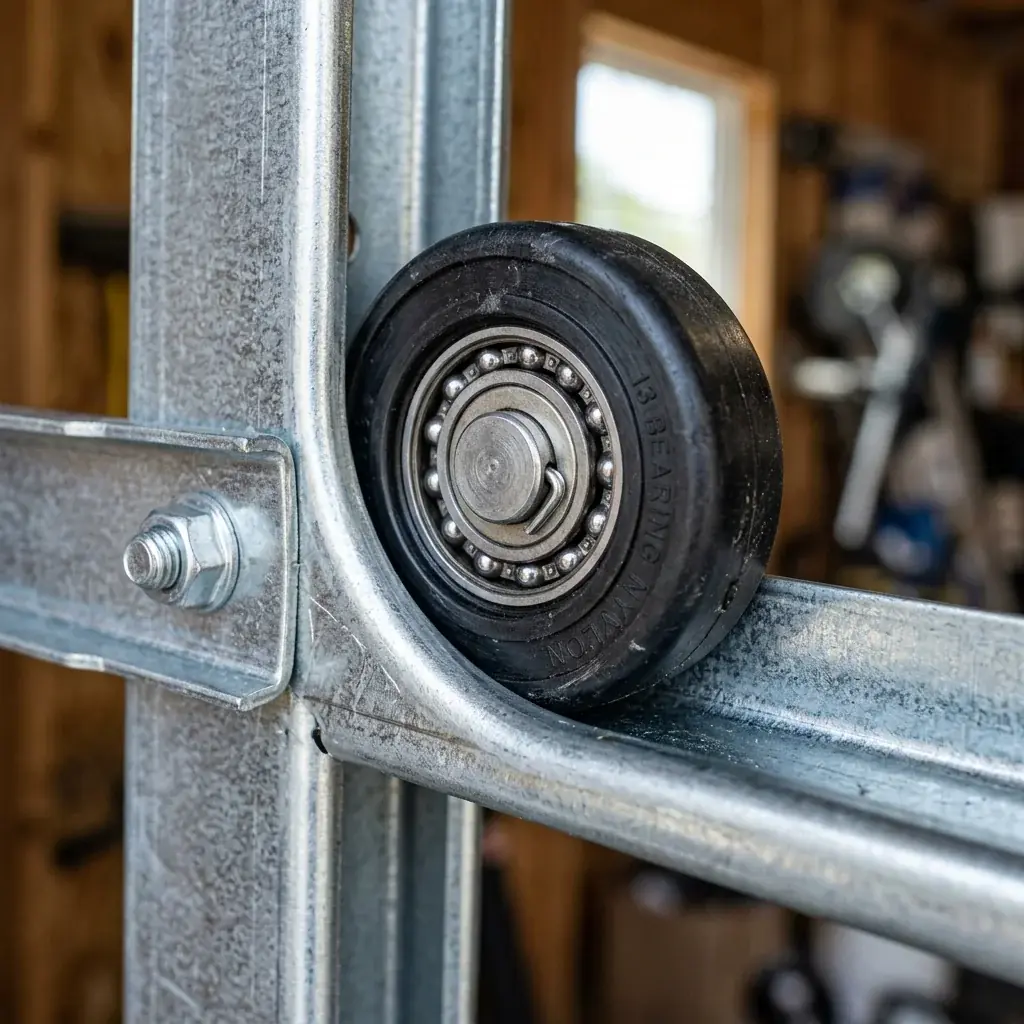
Step 3: Repair or replacement of failed components. Depending on the diagnosis, work may include replacing torsion springs, swapping damaged panels or slats, realigning tracks and guides, replacing rollers and hinges, rebuilding or replacing operator motors, and installing new seals and weatherstripping. Commercial-grade parts are used throughout – warehouse door hardware needs to withstand tens of thousands of cycles per year.
Step 4: Full-cycle testing and calibration. The repaired door is cycled multiple times under operating conditions. The technician verifies travel speed, stopping positions, safety reverse function, seal compression, and lock engagement. For high-speed doors, cycle time and sensor responsiveness are tested. For fire-rated doors, the closing mechanism is verified.
Step 5: Documentation and maintenance recommendations. You receive a summary of completed work, warranty information on installed parts, and specific recommendations for any other doors or components that should be addressed. For facilities on a maintenance program, findings are logged for tracking over time.
What Should You Do? Warehouse Door Repair Scenarios
If a forklift hit one of your warehouse doors: here’s what that usually means – the impact likely bent one or more panels, knocked a track out of alignment, damaged a hinge or roller, or pushed a guide channel out of position. Even if the door still cycles, operating it with bent components accelerates damage to the entire system. Your best next step: take the door out of service, photograph the damage for insurance documentation, and call (303) 335-5102 for a same-day assessment.
If a dock door won’t open and trucks are waiting: here’s what that usually means – a broken torsion spring, failed operator motor, snapped cable, or electrical issue has taken the door offline. Your best next step: do not attempt to force the door open manually. A commercial dock door can weigh 300 to 800 pounds or more. Call for 24/7 emergency service so a technician can restore the dock position as quickly as possible.
If you’re seeing energy costs climb and you suspect your doors: here’s what that usually means – deteriorated weatherstripping, cracked panel insulation, damaged bottom seals, or doors that no longer sit flush in their frames allow conditioned air to escape. In a cold storage or climate-controlled warehouse, this problem compounds quickly. Your best next step: request a seal and insulation audit across all your warehouse doors. Replacing worn seals is one of the highest-ROI maintenance investments a warehouse can make.
If a high-speed door is cycling slowly or not closing completely: here’s what that usually means – the motor, sensors, or curtain tracking system has an issue. High-speed doors are engineered for rapid cycling, and a slow door defeats its purpose of maintaining air separation between zones. Your best next step: have the door inspected before the slowdown causes a temperature excursion in your controlled environment.
If multiple doors across your facility are showing wear at the same time: here’s what that usually means – doors installed at the same time wear out at the same time. Springs, seals, rollers, and hinges all have finite service lives measured in cycles. Your best next step: request a facility-wide assessment rather than addressing doors one at a time. Denver Garage Door Ltd can evaluate all your doors, prioritize by operational impact, and schedule repairs to minimize disruption to your shipping schedule.
Preparing for Warehouse Door Repair and Maintaining Your Doors Afterward
Before the appointment. Clear the area around the affected door on both the interior and exterior sides. Move pallets, racking contents near the opening, and parked forklifts away from the work zone. If the door is at a loading dock, ensure the dock leveler is in the stored position and no trailers are backed in. Confirm that the technician will have access to the electrical disconnect for the door operator. If your facility has safety protocols – PPE requirements, visitor check-in, escort policies, or restricted zones – communicate those when scheduling so the crew arrives prepared.
During the repair. The affected door position will be out of service for the duration of the work. Coordinate with your logistics team to redirect truck traffic to adjacent docks or alternate bays. The technician needs access to both sides of the door and any overhead components accessible by ladder or lift.
After the repair – ongoing maintenance. Warehouse doors operate in demanding conditions and benefit significantly from proactive care. Visually inspect each door weekly – train dock and warehouse personnel to report frayed cables, cracked hinges, torn seals, bent panels, and unusual sounds rather than working around the issue. Lubricate rollers, hinges, and spring bearings quarterly with a commercial-grade lubricant appropriate for your temperature range. Do not lubricate the inside of the tracks.
Schedule professional preventive maintenance at least twice per year for standard doors, and quarterly for high-cycle shipping and receiving doors. A technician measures spring tension, checks track alignment, tests safety sensors, inspects the operator motor, and identifies worn components before they fail. Preventive maintenance costs a fraction of emergency repair and keeps your doors reliable through Denver’s temperature extremes and your facility’s daily demands.
What Affects the Cost of Warehouse Door Repair
Warehouse door repair costs vary based on several factors. Here’s what determines the estimate for your specific situation.
Door type and configuration. A standard 8-by-8-foot sectional dock door uses different hardware than a 14-by-16-foot rolling steel door or a high-speed freezer door. Larger doors have heavier springs, bigger motors, and more panels or slats. Insulated doors require matching insulated replacement panels. High-speed and fire-rated doors use specialized components that carry a premium over standard hardware. If your facility also has security grilles, those are quoted separately and can be bundled into the same service visit.
Scope of the failure. A worn bottom seal is a fast, lower-cost repair. A broken torsion spring is moderate. A forklift impact that bent three panels, knocked a track out of alignment, and damaged two hinges is a more involved job. The number of components affected drives the total.
Number of doors. Multi-door facilities benefit from consolidated service visits. Having 10 or 15 doors inspected and repaired during a scheduled window reduces per-door cost and gives the technician visibility into developing problems across the facility.
Parts availability. Common springs, rollers, seals, and panels from current-production manufacturers like Amarr, Overhead Door, and LiftMaster are stocked or readily available. Specialty panels, discontinued door models, and fire-rated components may require ordering.
Related dock equipment. If the dock leveler, bumpers, or seal need attention alongside the door, those items are quoted separately and discussed with you before work proceeds. These components work as a system, and addressing them together avoids repeat service visits.
Denver Garage Door Ltd provides free on-site estimates for all warehouse door work. No phone guesses, no surprise charges – just a written number based on what the technician finds. Call (303) 335-5102 to schedule your assessment.
Warehouse Door Terms You Should Know
Sectional overhead door – A door made of horizontal panels (sections) connected by hinges that ride in vertical and horizontal tracks. The most common door type at warehouse loading docks and shipping bays. Operated by a commercial jackshaft or trolley motor.
Rolling steel door – A door composed of interlocking steel slats that coil around a barrel assembly above the opening. Used at storage bays, security openings, and interior partitions where a solid steel barrier is needed and ceiling space is limited.
High-speed door – A door engineered for rapid open-close cycles, typically completing a full cycle in under 10 seconds. Made of fabric, rubber, or lightweight composite panels. Used between warehouse zones to minimize air exchange and maintain temperature or dust control.
Fire-rated door – A door rated to resist the passage of fire for a specified period (typically 1 to 3 hours). Required by building code at certain wall openings. Equipped with fusible links or automatic closing devices that activate when heat is detected.
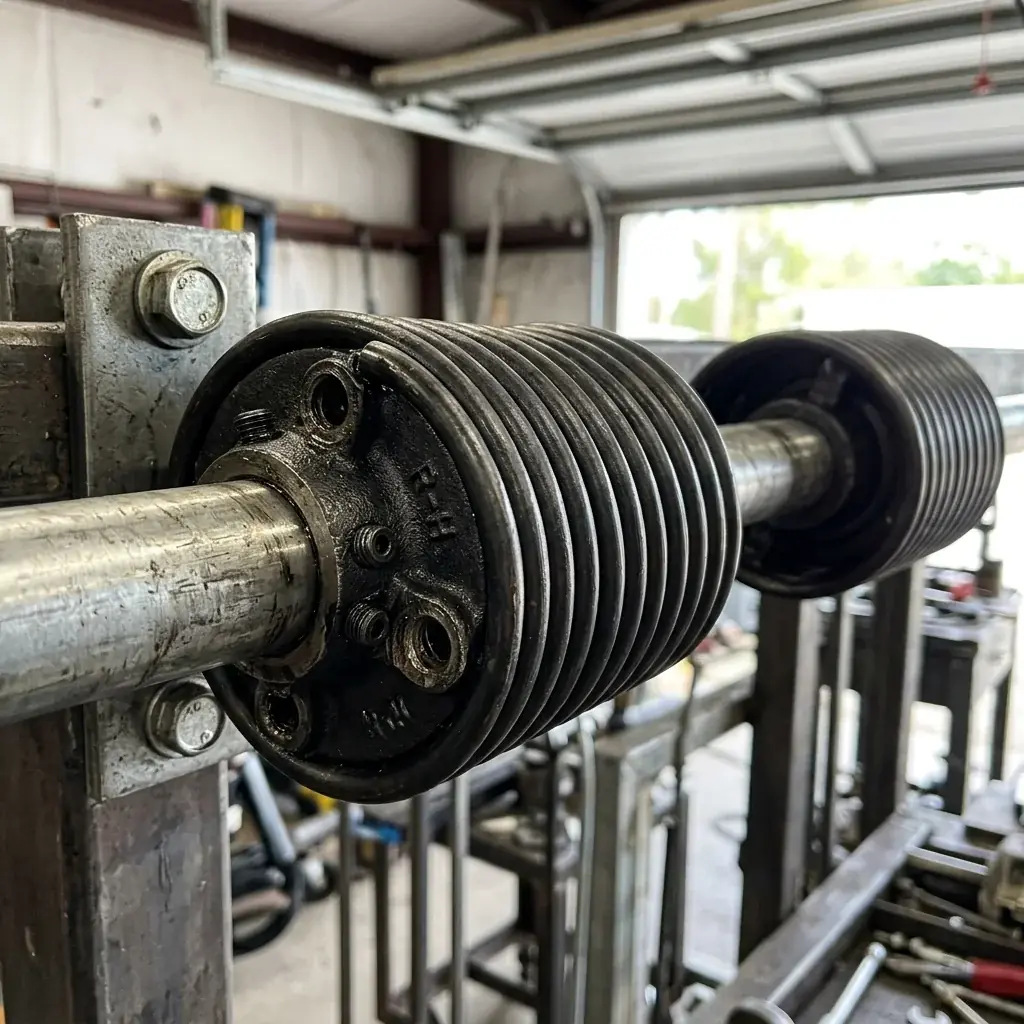
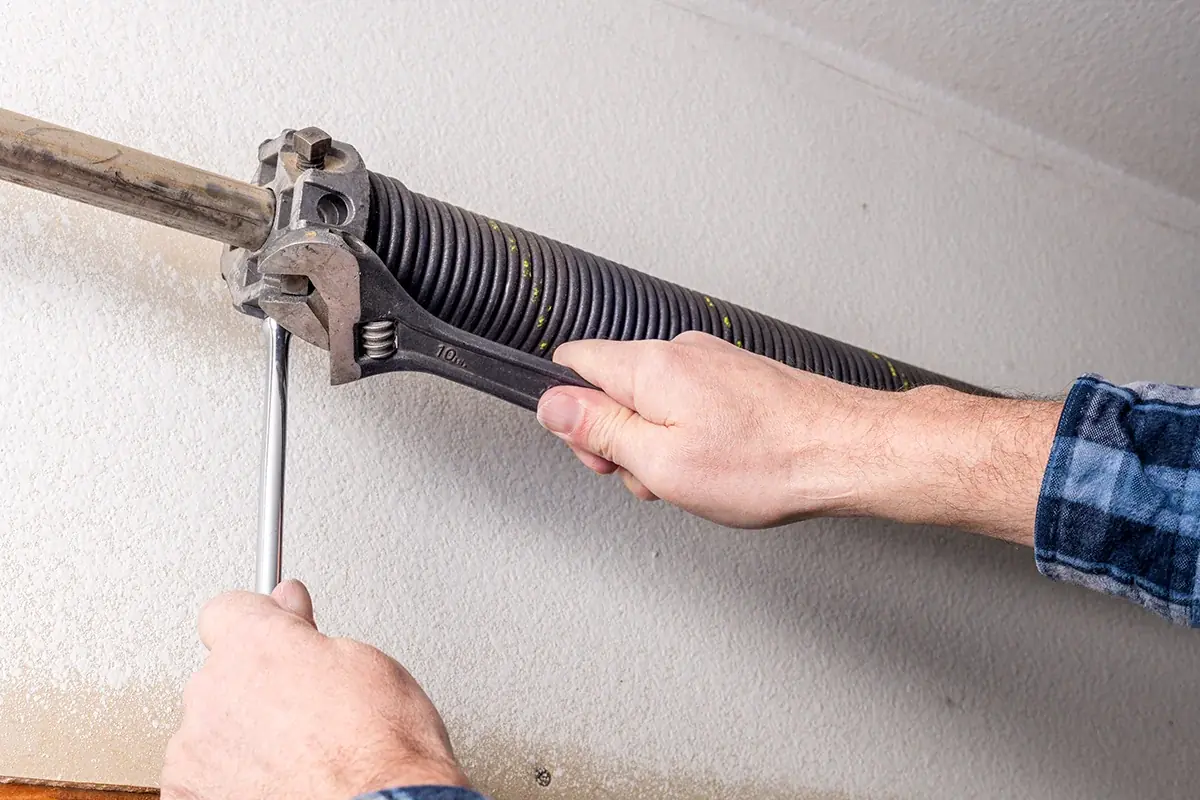
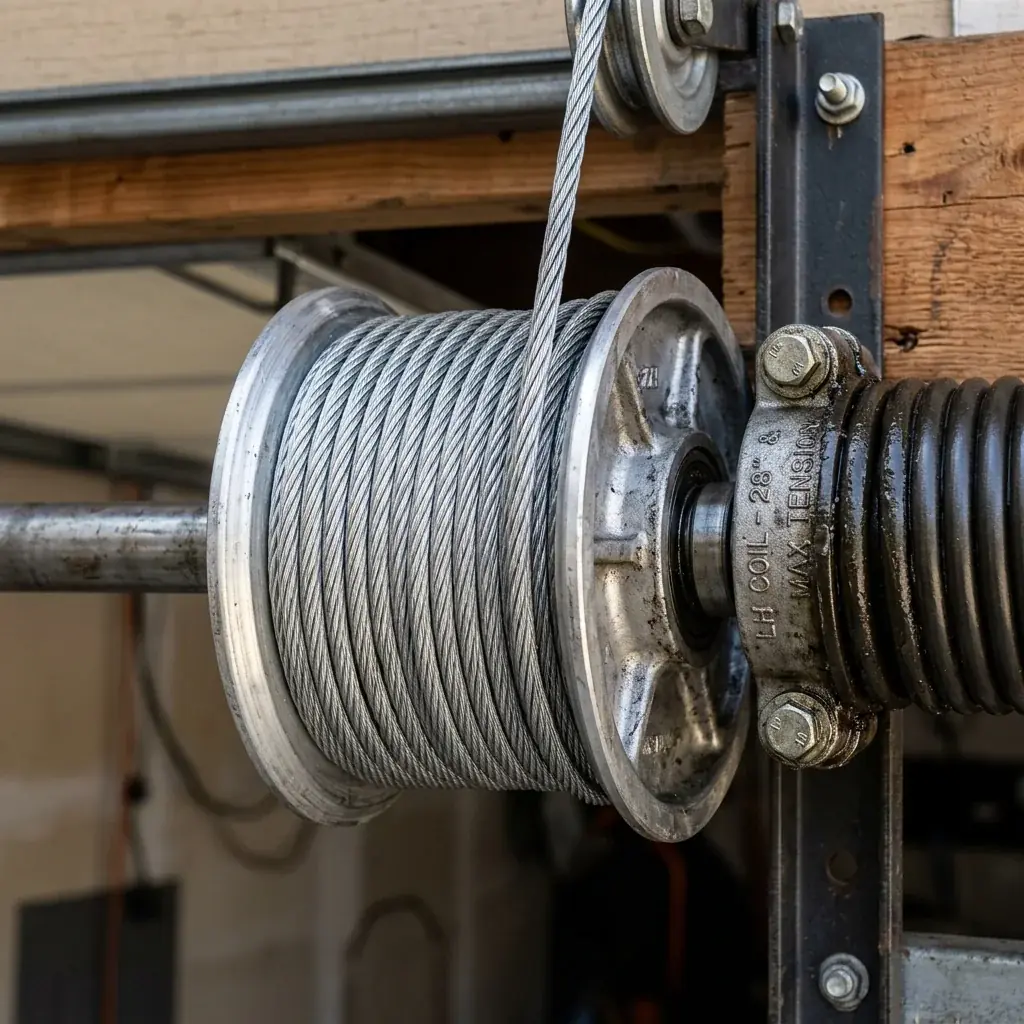
Torsion spring (commercial) – A heavy-duty spring mounted on a shaft above the door opening that counterbalances the door’s weight. Commercial torsion springs are rated by cycle life – typically 25,000 to 100,000 cycles depending on the grade. When a spring breaks, the door becomes extremely heavy and the motor can burn out attempting to compensate.
Dock leveler – A platform at the edge of the loading dock that bridges the height gap between the dock floor and the truck bed. Available in mechanical, hydraulic, and air-powered configurations. While not part of the door itself, a malfunctioning leveler affects dock operations alongside the door.
Dock seal – Foam pads covered in fabric that compress against a truck trailer when it backs into the dock, creating a weather-tight barrier during loading. Deteriorated seals allow air infiltration and reduce energy efficiency.
Entrapment protection – Safety devices required on powered warehouse doors to prevent the door from closing on people or equipment. Includes photo eye sensors, safety edges, and auto-reverse mechanisms. OSHA requires that these devices be operational on all powered doors in workplaces.
Cycle count – The number of times a door opens and closes. A busy shipping dock may cycle a door 50 to 100+ times per day. Cycle count determines how quickly springs, rollers, seals, and other wear components reach the end of their service life.
Jackshaft operator – A commercial motor mounted to the wall beside the door opening, connected to the door’s torsion shaft by chain or direct drive. Jackshaft operators are the standard for warehouse sectional doors because they free up ceiling space above the opening.
Frequently Asked Questions About Warehouse Door Repair in Denver
What types of warehouse doors does Denver Garage Door Ltd repair?
Denver Garage Door Ltd repairs all common warehouse door types including sectional overhead doors, roll-up doors, high-speed doors, fire-rated doors, and dock doors with associated levelers and seals. We service doors from all major commercial manufacturers and carry common replacement parts on our service vehicles.
How quickly can you respond to a warehouse door emergency?
Denver Garage Door Ltd offers 24/7 emergency response for warehouse and industrial clients. A non-functional warehouse door directly impacts shipping, security, and climate control, so emergency calls are prioritized. Call (303) 335-5102 any time – nights, weekends, and holidays included.
What is the best warehouse door repair service near me in Denver?
Denver Garage Door Ltd is a BBB Accredited Business and Denver Metro Chamber of Commerce member providing warehouse door repair across the Denver metro area. We offer free on-site assessments, written estimates, 24/7 emergency service, and technicians experienced with all major commercial door brands and warehouse-specific applications. Call (303) 335-5102 to schedule.
A forklift hit one of our warehouse doors. Can it be repaired?
In most cases, forklift-damaged warehouse doors can be repaired rather than replaced. Individual bent panels can be swapped, damaged tracks can be realigned or replaced, and broken hinges and rollers can be renewed. The technician assesses the full extent of the damage – including components that may not be visibly affected but were stressed by the impact – and provides a clear repair-versus-replace recommendation with pricing for both options.
Do you offer maintenance programs for multi-door warehouse facilities?
Yes. Denver Garage Door Ltd provides preventive maintenance programs tailored to warehouse operations. Programs cover scheduled inspections, spring tension checks, lubrication, seal replacement, safety sensor testing, and priority emergency response. For facilities with 10, 20, or 50+ doors, a maintenance program is significantly more cost-effective than reactive repair. Call (303) 335-5102 for program details.
How often should warehouse doors be professionally serviced?
At minimum, warehouse doors should receive professional preventive maintenance twice per year. High-cycle doors at busy shipping and receiving docks benefit from quarterly service. Doors in cold storage or freezer environments should be inspected more frequently due to the accelerated wear that temperature extremes and moisture create.
Can warehouse door repairs be done without shutting down the entire facility?
In most cases, only the specific door being repaired needs to be taken out of service. Adjacent doors and the rest of the facility can continue operating. For multi-door projects, Denver Garage Door Ltd schedules repairs in phases so you always have operational dock positions available during the work.
What causes warehouse door springs to fail?
Commercial torsion springs have a finite cycle life. A spring rated for 50,000 cycles on a dock door that cycles 50 times per day will reach the end of its life in roughly 3 years. Metal fatigue, Denver’s temperature swings, corrosion, and improper spring sizing all accelerate failure. High-cycle springs rated for 100,000 cycles cost more initially but last proportionally longer.
How do you handle fire-rated warehouse door repairs?
Fire-rated door repairs use manufacturer-specified components to maintain the fire rating. This includes correct-gauge slats or panels, proper fusible links, and verified automatic closing mechanisms. After repair, the closing mechanism is tested. Denver Garage Door Ltd provides documentation to support your facility’s fire safety compliance records.
Can you repair high-speed warehouse doors?
Yes. Denver Garage Door Ltd services high-speed fabric and rubber doors including motor, sensor, curtain tracking, and control system repairs. High-speed doors are critical for maintaining temperature zones and air quality in warehouse environments, so we prioritize these repairs to minimize the time your zones are unprotected.
What areas near Denver does Denver Garage Door Ltd service for warehouse door repair?
Denver Garage Door Ltd provides warehouse door repair across Denver, Aurora, Lakewood, Arvada, Centennial, Westminster, Highlands Ranch, Littleton, Parker, Englewood, CO, Castle Rock, Central Park, Green Valley Ranch, and the surrounding metro communities. This includes the major industrial and warehouse districts in Commerce City, Globeville, Elyria-Swansea, and along the I-70 and I-270 corridors. Service is available 24/7. Call (303) 335-5102 or email info@denvergaragedoor.com.
Is it cheaper to repair or replace an aging warehouse door?
It depends on the door’s overall condition, parts availability, and remaining useful life. A door with a single broken spring and otherwise sound panels and tracks is a clear repair candidate. A door with widespread panel damage, corroded tracks, a failing motor, and deteriorated insulation may be more economical to replace. Your technician presents both options with pricing so you can make an informed decision based on your facility’s budget and operational needs.
Will our business insurance cover warehouse door damage from a forklift accident?
Commercial property insurance often covers warehouse door damage caused by specific incidents such as forklift impacts, vehicle strikes, and storm damage. Normal wear and tear is typically excluded. Denver Garage Door Ltd provides detailed damage documentation and repair invoices for your insurance claim. Contact your carrier for your specific policy terms.
How does Denver’s climate affect warehouse doors?
Denver’s combination of temperature extremes, low humidity, UV exposure, and freeze-thaw cycling stresses warehouse door components year-round. Metal tracks and springs expand and contract with temperature swings. Weatherstripping and rubber seals dry out and crack under UV exposure. Snow and ice can accumulate in tracks and around door perimeters. These conditions make regular maintenance more important in Denver than in milder climates.
What should we do if a warehouse door safety sensor keeps tripping?
Do not bypass the safety system. Photo eye sensors and safety edges prevent the door from closing on people, equipment, and freight – they exist to protect your workers and your inventory. The sensor may be misaligned, dirty, damaged, or detecting a legitimate obstruction. Call for a technician to diagnose the issue. Bypassing safety devices on a warehouse door is an OSHA violation and a serious liability.
Can you upgrade our warehouse doors for better energy efficiency?
Yes. Denver Garage Door Ltd can replace non-insulated panels with insulated alternatives, install new weatherstripping and bottom seals, and recommend high-speed door additions at openings where air exchange is a concern. For warehouses that have grown or changed use since the original doors were installed, an energy-focused assessment often identifies straightforward upgrades that reduce utility costs.
Get Your Warehouse Doors Assessed – Free Estimate, 24/7 Service
A warehouse door that’s struggling is a dock position, a security barrier, or a climate zone that isn’t doing its job. Whether you’re dealing with a forklift-damaged door that needs immediate attention, a high-speed door that’s slowing down, or a facility full of aging doors that need a coordinated maintenance plan, Denver Garage Door Ltd has the commercial experience to get your warehouse running at full capacity. That same expertise extends to sectional overhead door repair across all door sizes and configurations.
We serve Denver and the entire metro area – Aurora, Lakewood, Arvada, Westminster, Centennial, Littleton, Parker, Highlands Ranch, Englewood, Castle Rock, and the industrial districts throughout Commerce City, Green Valley Ranch, and Elyria-Swansea. Every commercial assessment is free, every estimate is in writing, and we’re available 24/7. Call (303) 335-5102 or visit denvergaragedoor.com. Denver Garage Door Ltd, 2840 Fairfax St. #216, Denver, CO 80207.
why choose Denver Garage Door?
✅ Same-Day Service – Fast response times for urgent repairs.
✅ Local & Trusted – Serving homeowners and businesses across the Denver metro area for 8 years.
✅ Upfront Pricing & No Hidden Fees – Free estimates available.
✅ Warranty on Parts & Labor– We stand by our work.
General Garage Services
Spring Replacement (torsion & extension springs)
Opener Repair & Installation (belt, chain, and screw drive openers)
Cable Repair & Replacement
Panel Replacement
Track Repair & Realignment
Roller Replacement
Weather Stripping, Insulation & Sealing
Sensor Repair & Adjustment
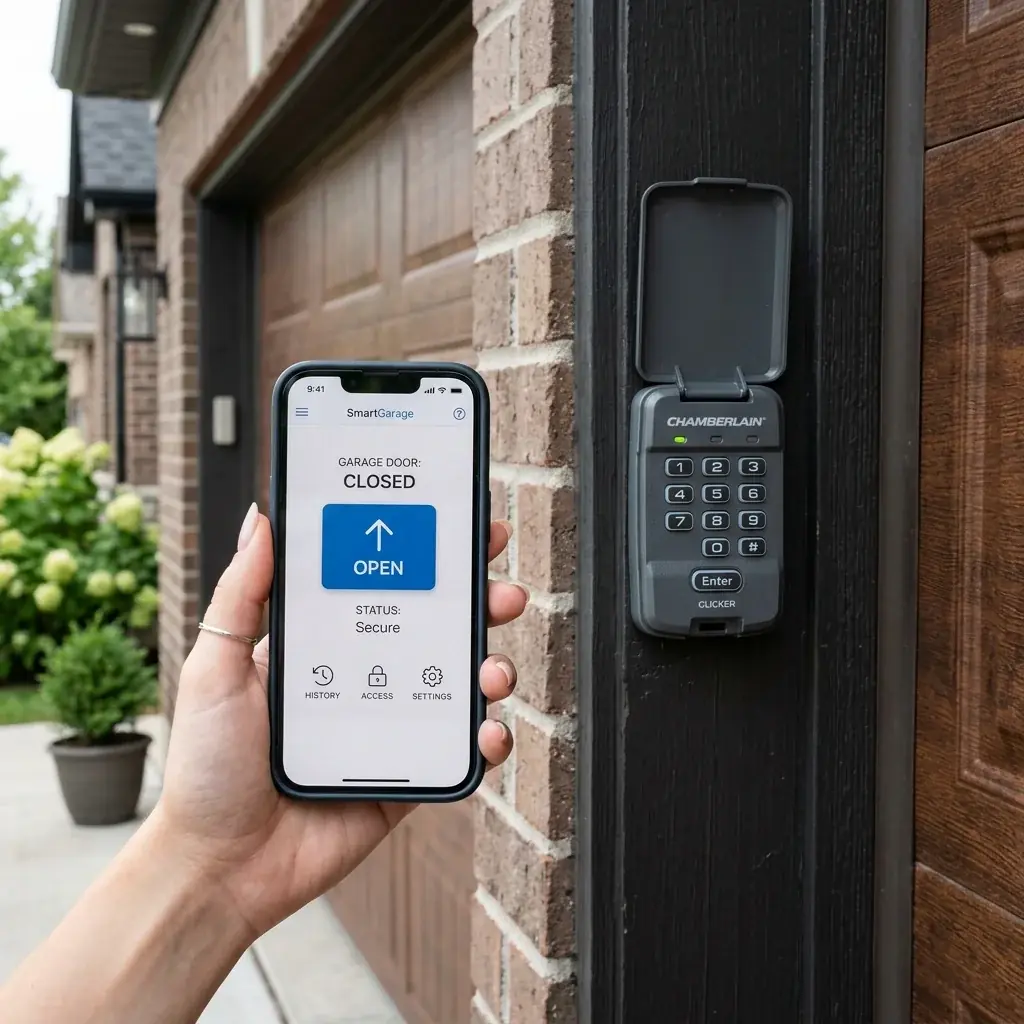
Remote & Keypad Programming
Installation, Upgrades & Maintenance
New Garage Door Installation (custom & standard doors)
Insulation & Energy Efficiency Upgrades
Smart Garage Door Opener Installation
Heavy-Duty Commercial Garage Doors
Lubrication & Preventive Maintenance
Safety Inspections & Balance Testing
Reinforcement & Strut Installation